
Having specialists in individual channels is not the same as having someone who knows what to do with all of them.
The ability to understand a market, develop a strategy, and produce a plan that connects with the right people used to be a basic expectation of anyone in marketing.
The “generalist marketer” is not some abstract concept. Thinking clearly about commercial growth is not (and has never been) a niche orientation, but the whole point of the role.
With plenty of channel expertise now available, what is harder to find, and what tends to matter most commercially, is someone who can see across all of it.
The last decade or so has produced an extraordinary proliferation of digital channels, platforms, and tools, and the industry responded in a predictable way…we built specialists around each of them. SEO specialists, paid social specialists, content specialists, performance marketers, and demand generation leads. Each role developed its own language, its own metrics, its own internal logic. As organisations hired for channel expertise, the people who could see across all of it - who could diagnose what a business actually needed and construct a coherent plan to deliver it - became harder to find and less consistently valued.
The fragmentation made a certain kind of sense in the short term. Channels became genuinely complex, and there is real skill in developing depth within them. The difficulty is that tactical proficiency is mistaken for strategic thinking, and the two require fundamentally different things. Knowing how to run a paid campaign is a skill. Understanding whether that campaign is the right tool for a particular business at a particular stage of its growth, what it is designed to achieve, and how it connects to everything else…that is marketing.
One of the clearest symptoms of this period is the way “digital strategy” became a working synonym for “marketing strategy” across a wide range of businesses. A plan covering paid search, social media, and email was treated as a complete picture of how a business would grow, when in reality it was a collection of channels with no organising principle behind them.
Channels are means. They are the mechanism through which a strategy reaches people, not the strategy itself. A business that has decided which platforms it will use but has not clearly defined who it is trying to reach, what it wants those people to think or feel, and what it is building towards over time is producing activity rather than marketing. Activity can feel like momentum, and for a while it can look like it too. It rarely survives the point at which results are measured against commercial outcomes rather than platform metrics.
Mark Ritson has argued for years that effective marketing requires both long-term brand building and short-term activation working together rather than in competition. Byron Sharp’s research reaches a similar conclusion from a different angle: growth comes from being easy to find and easy to recall across a wide market, not from concentrating effort on an ever-narrower audience with ever-more-targeted messages.
Neither of these ideas is new, which is part of what makes the current conversation about “generalist” marketing feel slightly strange. The case for integrated thinking, for breadth alongside depth, for understanding the market before deciding on the method - this has always been what the craft looked like when practised properly.
Channels, content, campaigns, and creative are all expressions of a strategy built on a comprehensive understanding. The strategic layer is what gives the executional work its coherence and its commercial purpose.
The pattern we see is businesses running content for months without a clear picture of who it is for. Campaigns that have been set up around a channel decision rather than an audience insight. Podcasts launched because a competitor had one, without a defined sense of what the business wanted the listener to do afterwards.
The work that tends to matter most in those situations is not adding to what is already happening. It is stepping back to establish what the business is actually trying to achieve over the next twelve months, who specifically needs to be reached in order to get there, and which activities give it the best chance of working - before any more time or money goes into execution (it’s why we’re called ‘Real View’!).
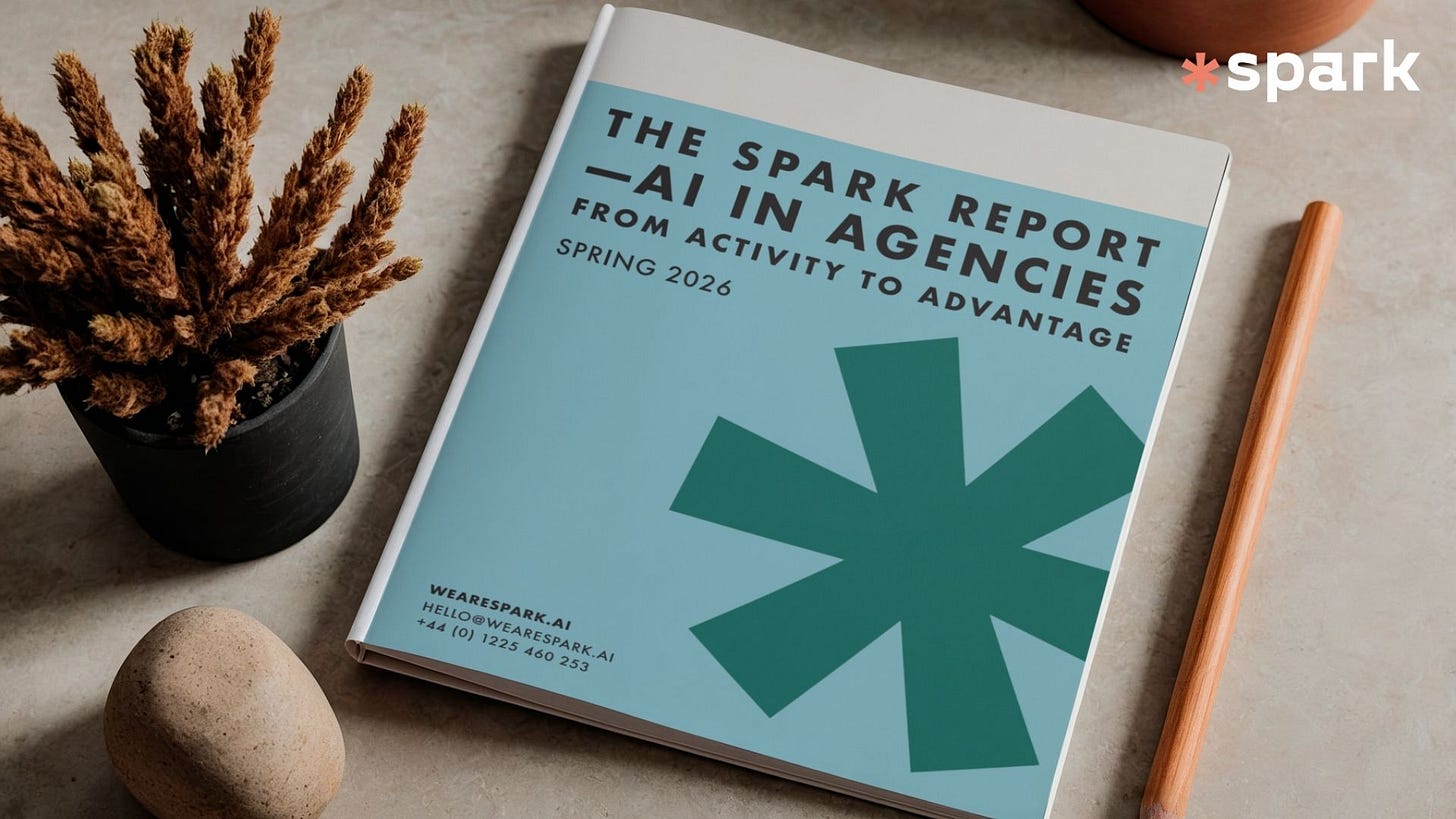
A recent example of this is the work we did for Spark AI. We helped form a comprehensive marketing strategy based on their audience and then developed a comms plan to support the launch of the AI Adoption Benchmark report. These elements were properly integrated with strategic expertise sitting over the top and channel experts were brought in after e.g. across email and PR.
This was not a complicated process, but it does require a willingness to pause before producing, which runs against a lot of the instincts that tend to drive busy businesses. Content with a clear audience and a clear purpose. A way of measuring progress that connects to revenue rather than reach and a realistic sense of how long it takes for that kind of activity to build into something visible and commercially meaningful, which is usually longer than most businesses initially expect, and shorter than they fear once the right foundations are in place.
There are practitioners who are very good at specific components of the marketing craft, and that expertise has genuine value. The best outcomes tend to come from combining it with someone who understands where each component fits and what it is collectively trying to achieve.
Marketing, done properly, has always meant building a clear picture of a market, developing a considered position within it, and executing a plan that moves the business towards a commercial goal over time. The tools available to do that have changed enormously. The thinking required has not.

stay in the know

.png)
Has AI turned us blind?
⏱
4 min
Inertia is the real enemy: learnings from Cannes Lions
⏱
4 min

An excellent marketing strategy never came from a prompt
⏱
6 min
Your marketing shouldn’t suffer like your New Year’s Resolutions
⏱
6 min
Built for service-based businesses who want to be the brand people trust.
© 2026 Realview Marketing Ltd.
Website design by Wiggle Creative